

A few years ago, if you wanted to know why a region missed its number, you opened a dashboard. Today you type the question. That change is real, and I think it is bigger than most people give it credit for.
I can see it in our own numbers. Across the Cimba platform we now handle hundreds of thousands of conversational interactions a month, and the volume is growing significantly month over month. That is not a pilot curve. People who would never have opened a BI tool are asking questions of their own data every day.
And I still think we are scratching the surface. The interface got much better. The thing that actually caps how much value a business gets out of its data did not move at all.
The short version
- A dashboard and an AI-BI agent share one precondition: a person has to show up and ask. Until someone does, both surfaces sit idle.
- The expensive questions are the ones nobody thinks to ask, and a question-driven system has its worst coverage where the exposure is largest.
- Proactive Next Best Action inverts the trigger. The system watches the records the business already keeps, finds the root cause, recommends one specific action with its projected impact, and routes it to the owner.
- Acting without being asked raises the engineering bar: precision over recall, stated assumptions, human-in-the-loop approval, and an append-only trail on every run.
- Attribution follows from the inversion. The measured outcome lands against the exact action that produced it, not against hours saved.
What the move to AI chat actually fixed
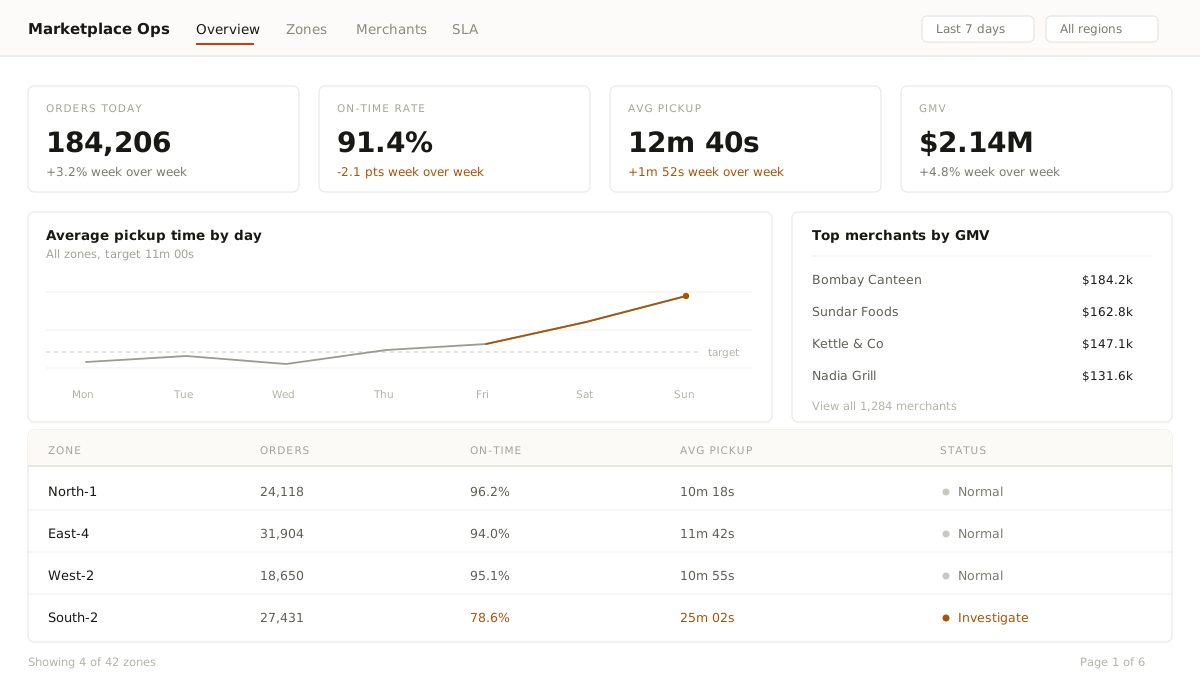
The dashboard era had one specific cost: the distance between having a question and getting an answer. You opened a tool, found the right tab, applied filters someone else had defined a year earlier, and if the answer was not already on the page you filed a ticket and waited three days for an analyst who had forty other tickets.
Chat collapsed that distance. Ask in plain language, get an answer in seconds, ask the follow-up. The follow-up is the part that matters most. The cost of the second and third question fell to almost nothing, and the second question is usually the one that finds the driver.
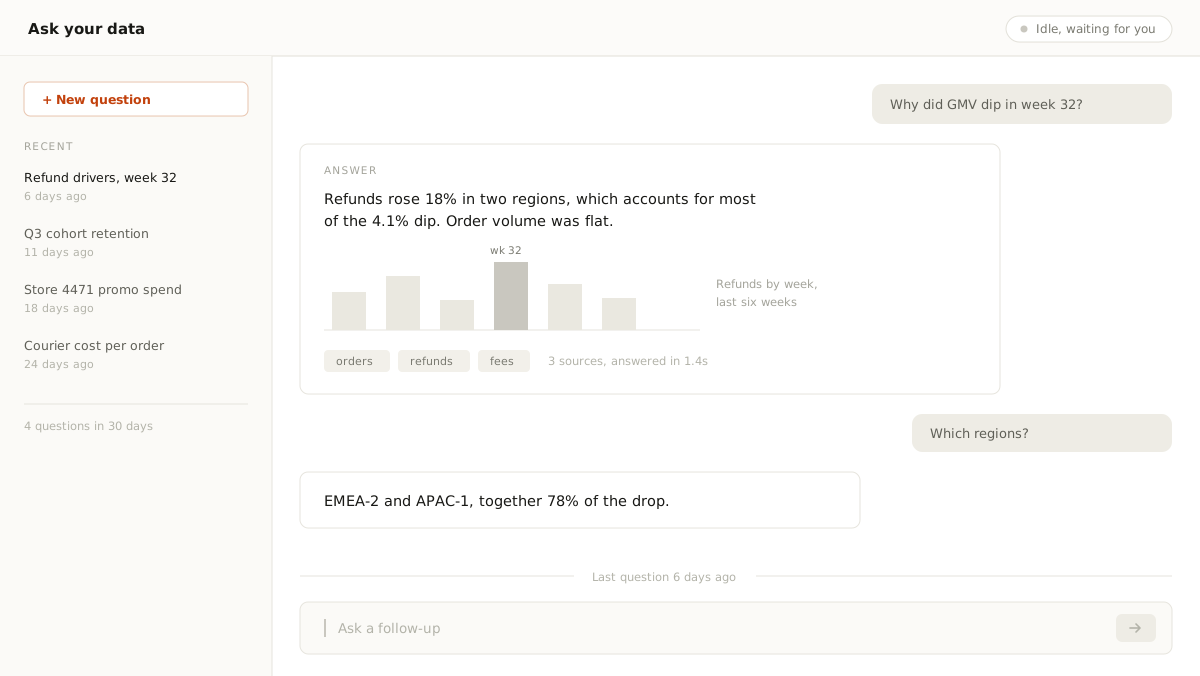
So this is not a piece about AI-BI chat being a wrong turn. It was a necessary one, and the adoption we see says the market agrees.
The bottleneck that survived the upgrade
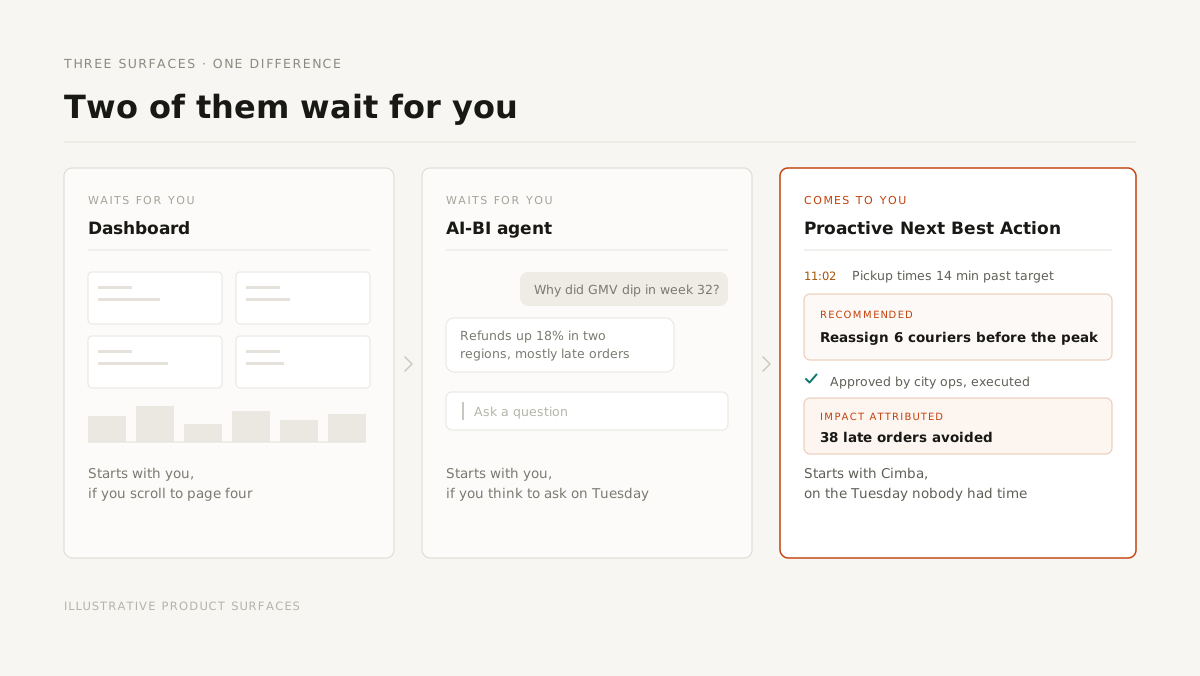
Here is what I keep coming back to. A dashboard and an AI-BI agent share the same precondition. Both of them require a human to start.
The dashboard requires you to log in and look at the right tile. The AI-BI agent requires you to think of the question and ask it at the right moment. Very different amounts of effort, exactly the same trigger. Until a person shows up, the system is idle.
Which means the failure mode carried over intact. In the dashboard era you missed things because the chart was on page four and nobody scrolled. With an AI-BI agent you miss them because nobody thought to ask on Tuesday. The tool answered every question it was asked, correctly and in two seconds, and the opportunity went by anyway.
| The dashboard | AI-BI agents | Proactive Next Best Action | |
|---|---|---|---|
| What starts the work | You log in and look | You think of a question and ask it | Cimba notices, on its own |
| What you get back | A chart, if the right one exists | An answer, usually a good one | A recommended action with projected impact |
| Who has to know the question | Whoever built the tile, months ago | You, in the moment | Nobody. Cimba brings the finding to the owner |
| On a week when nobody has time | Nothing happens | Nothing happens | The work still happens |
| What is left behind | A screenshot in a deck | A thread nobody can act on later | An append-only record of the action and its outcome |
The questions nobody thinks to ask
The questions you ask badly are not the expensive ones. Those get corrected on the follow-up, which now costs nothing. The expensive ones are the questions you never ask at all, because you cannot ask about something you do not know is happening.
An account manager carrying 300 merchants can hold maybe a dozen of them in their head on a given day. The other 288 are throwing off signals the entire time. A store that quietly stopped funding its promotions. A category where a competitor took share in one metro. A partner whose complaint rate crossed a threshold on Wednesday. None of those raise a hand. They exist as a row in a table nobody queried.
And notice that the pattern runs backwards. The people with the widest span and the busiest week are exactly the people with the least time to sit and compose good questions. So a question-driven system has its worst coverage precisely where the exposure is largest.
The expensive question is not the one you asked badly. It is the one you never thought to ask.
merchant_portfolio300 accounts, one weekMon 08:12Store 4471 stopped funding its weekend promonot askedTue 11:40Repeat-order rate down 9% at three top-50 merchantsnot askedWed 07:55Complaint rate crossed the review threshold in two zonesnot askedWed 16:20A category competitor took 4 points of share in one metronot askedFri 09:03Merchant 812 renewal is 21 days out, usage down 20%asked on day 12Invert the trigger
That is the whole idea behind a Proactive Next Best Action: a recommendation the system raises on its own, without anyone asking, carrying the specific action to take, its projected impact, and the owner it belongs to. Stop waiting for the question. Watch the systems the business already runs on, and when something moves, take it to the person who owns it with a recommended action already attached.
Detection is the easy half. What makes it worth someone’s attention is everything after: a root cause rather than an anomaly, one specific recommended action rather than a menu, the projected impact of taking it, an owner it is routed to, and a path to execute so that approving it actually does something. An alert with no action attached is just a faster way to feel behind.
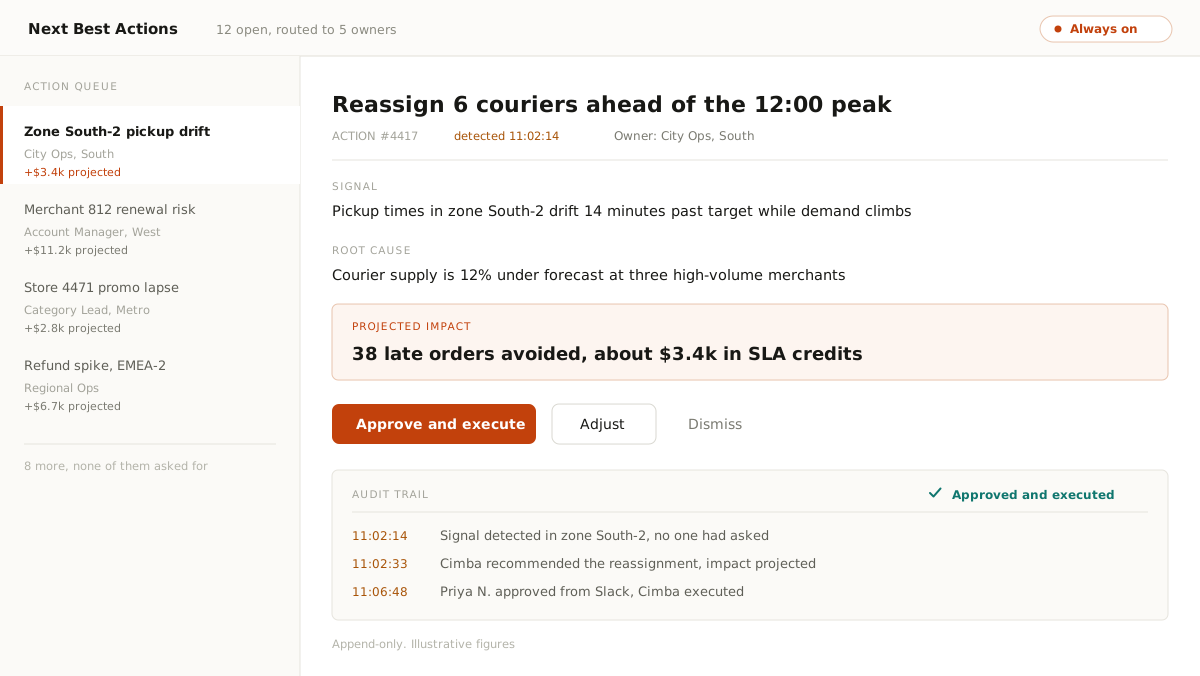
That projected impact line is what changes the conversation with a CFO. Once the action runs, the measured result lands against the exact action that produced it, not in hours saved and not in a sentiment survey. One measured action is a rounding error. Compounded across hundreds of actions a week, that is how operations teams reach +20% revenue per customer.
It is also the answer to the question I get asked in every enterprise AI evaluation, which is how anyone is supposed to prove the return. You can only attribute ROI to a recommendation if the system made a specific one and you can point at what happened next. Chat transcripts do not give you that. Token volume does not either.
Acting without being asked raises the bar
An answer you asked for gets graded gently. You already had the context, you were already looking, and if it comes back mediocre you rephrase and move on. A recommendation nobody asked for gets graded harshly. It lands in the middle of someone’s day, uninvited. If it is wrong twice, it gets muted, and a muted system is a dead one.
So the engineering standard is different, and higher. Precision matters more than recall. The recommendation has to be specific enough to act on without a second investigation, has to state the assumptions it made, and has to be traceable back to the data that produced it. This is the part of proactive AI that is genuinely hard, and it is not a model problem.
It is also why human-in-the-loop approve-and-execute, role-based access, and an append-only trail on every run are not compliance decoration here. They are the reason a person is willing to let a system act on their behalf a second time.
AI-BI agents do not go away
None of this is a replacement argument. The conversational surface is the right place for the follow-up: why did this happen, what else is exposed, what if we do the other thing. Cimba surfaces the action, and the conversation starts from there. It runs alongside the BI and AI tools a team already has, reading from the warehouses and applications that already hold the record. What changes is who starts the conversation.
Where this goes
For most of the last decade, the ceiling on what a company gets out of its data has been set by human attention. Dashboards asked for a lot of attention and mostly did not get it. Chat asked for much less and got far more, which is exactly why the usage numbers moved the way they did. But both are still rationing the same scarce input.
Proactive Next Best Action takes attention out of the critical path. The system does the noticing. A person does the deciding, and keeps the authority to say no. That is the right division of labor between software and an operator, and I think it is where AI in operations ends up.
Frequently asked questions
Do AI-BI agents replace dashboards?
For the job of getting an answer, largely yes. Chat collapsed the distance between having a question and getting an answer, and it made the second and third question almost free, which is usually where the driver is found. What it did not replace is the trigger: both a dashboard and an AI-BI agent wait for a person to arrive.
What is a proactive Next Best Action agent?
A proactive Next Best Action agent watches the systems a business already runs, and when something moves it takes the finding to the person who owns it with a recommended action already attached. The recommendation carries a root cause, one specific action rather than a menu, the projected impact of taking it, an owner, and a path to execute on approval.
How is a Next Best Action different from an alert?
An alert tells you a number moved and leaves the diagnosis, the decision, and the execution to you. A Next Best Action carries the root cause, one recommended action, its projected impact, and an approve-and-execute path, so approving it actually does something. An alert with no action attached is just a faster way to feel behind.
Does proactive AI replace the BI and AI tools a team already has?
No. The conversational surface is the right place for the follow-up question: why did this happen, what else is exposed, what if we do the other thing. Cimba surfaces the action and the conversation starts from there, reading from the warehouses and applications that already hold the record. What changes is who starts the conversation.
How do you measure ROI on a proactive AI agent?
By attributing the measured outcome to the specific action that produced it, rather than to hours saved or a sentiment survey. That is only possible if the system made a specific recommendation and you can point at what happened next, which chat transcripts and token volume do not give you. Compounded across hundreds of actions a week, that is how operations teams reach a 20 percent lift in revenue per customer.
What stops a proactive system from acting on bad information?
Governance that is load-bearing rather than decoration. Every recommendation states the assumptions it made and traces back to the data that produced it, a human approves before anything executes, access is role-based, and every step is written to an append-only trail. A recommendation nobody asked for gets graded harshly, so precision matters more than recall.
Cimba is proactive AI for enterprise business and finance operations. It watches the systems you already run, surfaces the Proactive Next Best Action, and helps the right person execute it, with every step logged. See what it surfaces on your own data → book a demo.
What did your team miss last week?
Bring one account list. We will show you what surfaces without anyone asking.